
🚀 Start and finish#
This page contains the information for the Start team.
People: Start team
Time: follow schedule for the
Start teamon each dayGear: see the full list of equipment
:color: primary :shadow: Notes for the start team
Functions of the start team#
The main function of the start team is to ensure fairness of the competition by providing smooth and well functioning start process. The team should:
follow the schedule for the
start teamon each dayset up start equipment and bunting
implement start arrangement for each event according to the diagrams
manage the start process according to the bulletin and the competition rules (documents)
pack up the start equipment and get ready for the next event
use own transport to move equipment between events
Schematic for the start setup#
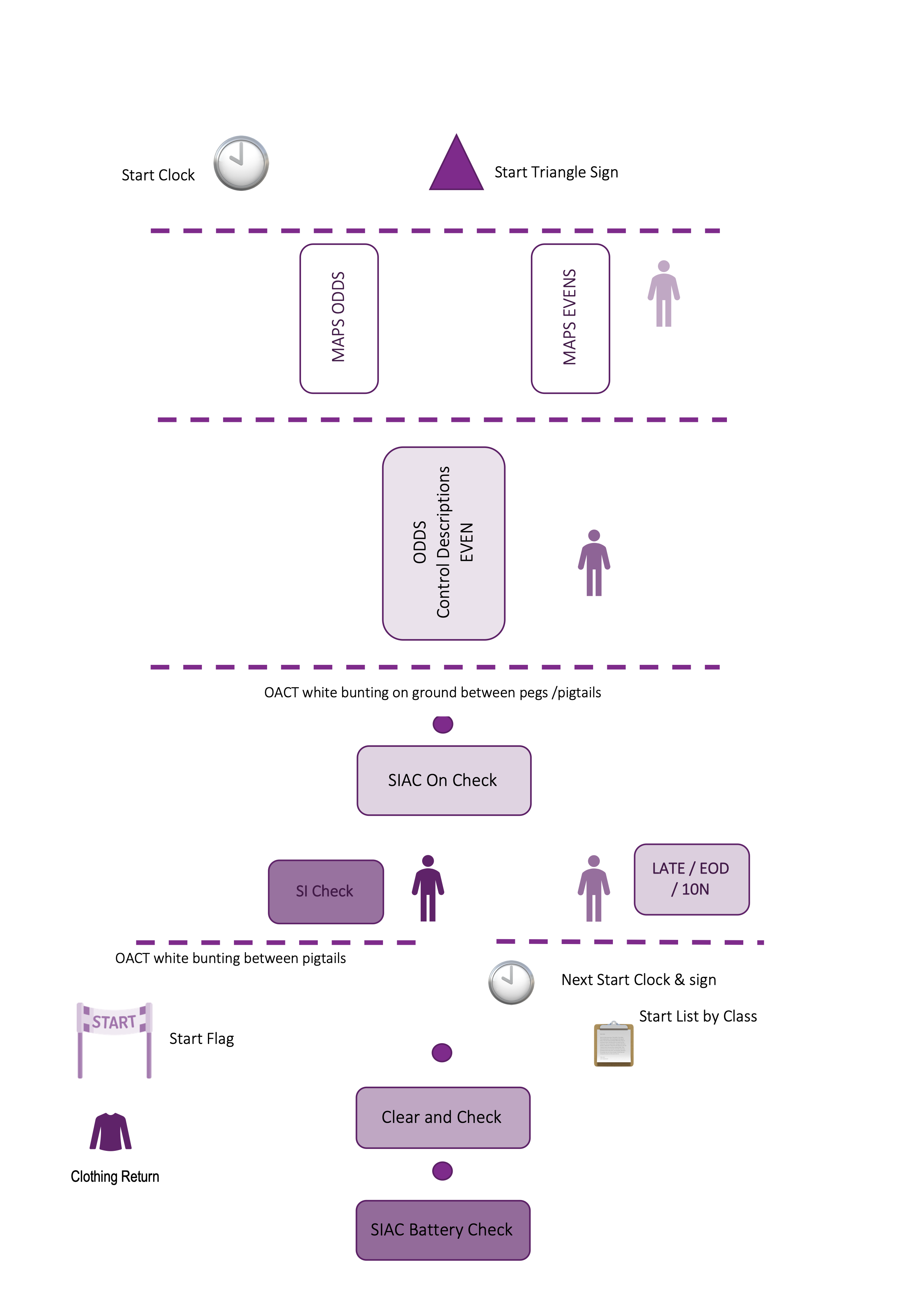
The following diagram shows the overall setup of the start area and process for MIDDLE, SPRINT and LONG events.
Flight of the Bogong events after ASOC, will require a change to the start set up with both queueing and mass start arrangements.
Oceania Relay will have a separate set up too.
Championship classes have allocated start times
EOD, 10N and volunteers will have a
punch startand can start any time within a designated start windowSchematic should be adjusted to the layout of the start area in each event
The start area should be clearly marked with bunting and signs, see equipment list
Gear and equipment#
The start has a 3x3m tent, small table and two chairs
The table with the control descriptions should be placed under the tent, with two lanes for the competitors on both sides of the table
The minute boxes can be marked by staking the bunting to the ground
Technical notes#
SI units at the start#
SI units should be arranged in a visible sequence: SI BATTERY CHECK - CLEAR & CHECK - SI CHECK - SIAC ON CHECK (START only for Late, EOD, 10N and Volunteers)
CLEAR & CHECK, SI CHECK and START units have to be punched (the chip inserted until the beep)
SIAC ON CHECK unit is there to test whether the chip is working in the radio module — competitors should just wave over the unit. The range of the test unit is 30cm, whereas all units on the course have a range of 1.5m
The most important unit is SI CHECK: it turns on the SI-Air chip, IT team uses this punch as evidence that a competitor is in the forest
SI CHECK unit should be held by a start official, and manually given to each competitor as they pass to -3 minutes box
All SI inits should be time-synced and properly set up before the start. They are turned on by inserting SI chip into the unit until the beep. The units should be turned off using special “service off” card after start closes.
meshO radio units at the start#
Blue SI units with short range radio (SRR) should be used for CHECK and punch START
meshO radio unit should be placed within 4-5m from the CHECK unit, and ideally at the same distance from the punch START unit
there will be one meshO unit for Championship and one meshO unit for Carnival starts
meshO units are turned on by sliding a magnet along the left side of the unit away from the antenna, and turned off by sliding the magnet towards the antenna
Setup of start clock#
Start clocks to be synced by download tent each morning